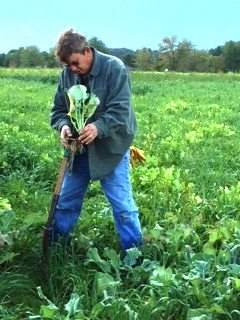

Cover crops are planted for the primary purpose of improving the soil. For hundreds of years, farmers have used cover crops to restore fertility to worn-out land. Recently, more farmers are turning to cover crops not just because of improvements to soil fertility, but because of other benefits to the land and water. Cover crops also help:
- Prevent soil erosion
- Reduce soil compaction
- Increase nutrient availability and reduce fertilizer applications
- Provide weed control
- Help control pests such as nematodes
- Increase earthworm populations and beneficial microorganisms
- Increase water infiltration
- Reduce surface water runoff and soil/nutrient loss
The USDA Natural Resources Conservation Service offers financial assistance to farmers interested in planting cover crops through the Environmental Quality Incentives Program (EQIP) and Conservation Stewardship Program (CSP). For more information on these programs or on upcoming sign-ups, Clermont and Brown County farmers should contact John Williams, NRCS District Conservationist, at john.williams@oh.usda.gov or at (513) 887-3720.
Clermont SWCD, NRCS and local farmers have also worked together to create two booklets designed to help farmers on their way with cover crops. These can be downloaded below.
- Cover Crops for Southwest Ohio – provides information on selecting the right cover crop, seeding guidelines, planting dates, management strategies and termination guidelines
- Cover Crop Farmers of Southwest Ohio – give insight from five cover crop farmers in Clermont, Brown and Warren Counties.
The Midwest Cover Crop Council has created a very useful online Cover Crop Selector Tool to assist farmers in selecting cover crops to include in field crop and vegetable rotations.